Increasingly, municipalities are recognizing the important role that thermal energy networks (TENs), also known as district energy systems, can play in helping cities achieve their climate goals. However, TENs do not develop by default. Governments must take an active role in identifying suitable areas for and creating the conditions to facilitate and support system development.
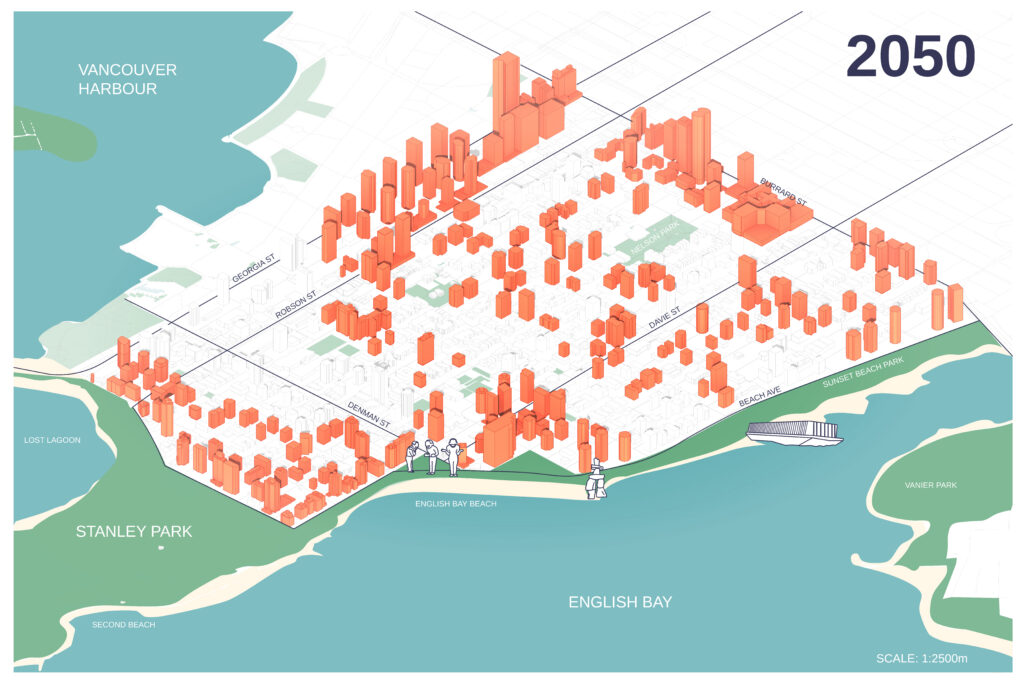
This practice of identifying areas most suitable for TENs is typically done through a process of “heat planning”. This work can identify areas where building-scale or neighbourhood-scale decarbonization can offer the lower cost pathway for building decarbonization for some or all buildings in a given area. Heat planning also looks at the impact on gas and electric infrastructure of different building decarbonization pathways (i.e. building-scale, or decarbonization via TENs).
While identifying areas most suitable for TENs is often one of the core objectives of a heat plan, the work can also help inform focused and coordinated areas for building-scale decarbonization. If a heat plan deems an area is more suited to building-scale decarbonization, it can help government and utilities focus policies and program and building-scale approaches (strategies like bulk purchases of equipment, efficiencies from coordination of contracting and installation for many building-scale solutions within a given neighbourhood).
These plans may go by different names (area-based planning, local heating and cooling plans, heat zoning, etc). Common objectives are to provide a coordinated, phased strategy for building decarbonization within a defined geographic area. These plans aim to identify, prioritize and utilize local clean and renewable heating and cooling sources at the local level and sometime include information relevant to gas and electrical infrastructure planning as well.
Heat plans plan integrate information on building thermal energy use, the local electrical distribution system, the local gas grid, and local low-carbon thermal energy sources or existing thermal utilities into a spatial and temporal model. This information is used to inform planning, policy, utility program and project decision making.
Although the scope of Reshape’s engagements have varied by client, our heat planning and TENs strategy work typically includes some or all of the following:
- Data-driven geospatial analysis of existing energy use, community plans, energy resources and other data sets to identify opportunity areas for TENs
- Prioritization of TEN opportunity areas
- Recommendations for next steps on near-term opportunities
- Recommendations for municipal policies to support the development of TENs in priority area and across a City or region
- Identification of areas where building-scale decarbonization is likely to be the preferred pathway for building decarbonization
- Quantification of electricity grid impacts under TENs and direct-electrification pathways
Reshape has supported many of our clients in the development of Thermal Energy Network or District Energy (DE) Strategies and Heat Plans, including:
- A District Energy Opportunities study for the City of Edmonton which formed the basis of the City’s District Energy Strategy. Reshape continues to support the City of Edmonton as they work to implement their DE strategy.
- The City of Calgary engaged Reshape to complete a DE Opportunities study to identify areas throughout Calgary where DE is expected to be the preferred pathway for low-carbon growth and decarbonization of existing buildings, and to recommend policy and ownership models that will enable the development of DE throughout the city in support of the City’s Climate Strategy goals.
- Advising the City of Coquitlam on current drivers of DE development, DE ownership, governance and regulatory considerations, as well as completing a high-level evaluation of district energy potential throughout the municipality to identify opportunity areas for DE development.
- Completing a resource-driven assessment of DE opportunities for Waterloo Region, based on heat recovery from the Region of Waterloo’s extensive water and wastewater infrastructure.
- Completing a heat plan for the West End neighbourhood in Vancouver, BC. This included mapping heat demand and waste heat sources and using this information to prioritize areas most suitable for a TEN. We then completed a pathways assessment of building vs. TENs decarbonization for these areas based on lifecycle cost and electric grid impacts of both pathways. Finally, we completed stakeholder engagement with building owners and other stakeholders and worked with the City and BC Hydro on potential ownership alternatives for a future system.
- Completing a DE Plan for the Comox Valley Regional District (CVRD). The work included mapping heat demand and waste heat sources and identifying and prioritizing areas suitable for DE development. Our team also advised the CVRD on potential DE ownership models.
- Leading the development of a detailed scope of work to evaluate TENs opportunities across the Metro Vancouver region.
