Our Team: A Story of Cities
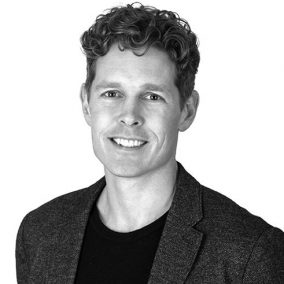
WILL CLEVELAND, Principal
Will is an economist and financial analyst with experience in utility services, infrastructure projects, and real estate development. He did his undergraduate degree at Georgetown University and his Masters of Science at the London School of Economics.
London, UK
Will earned his Masters of Science in Economics from the London School of Economics. His education got him excited about how innovative policies can reshape cities for the better. And his time in real estate development stoked his desire for hands-on work. “I was drawn to energy and infrastructure consulting, which is right at the intersection of cutting-edge policy and actual projects.”
Vancouver, BC
The UBC project to reclaim heat from the university’s particle accelerator has Will very excited. UBC will be able to reduce greenhouse gas emissions by using the reclaimed energy to heat other buildings. “Reshape has contributed a lot to moving UBC forward with a unique project. We have been involved from study work right through to implementation.”
Chicago, IL
Will lived in the Windy City for years and loved it there. He moved to Chicago right after his undergrad at Georgetown, and it was his first big-city home, even grander in scale than Washington, DC. Inspired by the Chicago architecture, Will started to think about how cities are put together and how they evolve over time. “In a block with buildings from different time periods, you can see all the layers of different eras, different materials and construction technology, different zoning regulations, different priorities, all lined up a row.”
GERARD MACDONALD, Principal
Gerard is a non-practising professional engineer with over 15 years of experience in policy, design, and operations of building energy systems and community energy infrastructure. He has a Bachelor of Mechanical Engineering from the University of Waterloo and a Masters of Clean Energy Engineering from the University of British Columbia. He is passionate about cities, climate issues, as well as baseball and the BC backcountry.
Kobe, Japan
Right out of university, Gerard lived near Kobe. It was there that he had the realization that cities are built, not inherited. Having grown up in the long-established city of Montreal, seeing Kobe built back up as a brand-new city after the catastrophic earthquake in the mid-90s made him realize – cities are built! Those who work on them can shape the way they look, feel, and perform. This city-building awakening, the Japanese ethic of hard work and perseverance, and the culture of seeking both a pragmatic and beautiful solution still resonate with Gerard today as he strives to bring these same values into his consulting practice.
Toronto, ON
Over the past few years of supporting clients on work in Toronto, Gerard has become reacquainted with the city where he lived off-and-on while in co-op placements for university. “The city has changed so much in the last 20 years and there is so much change still happening. We are in the midst of a city-building era in Toronto, and the top end of where the city will go isn’t anywhere in sight. It is such an important centre for Canada, and as it matures into a global city, how that growth happens is important not just for Toronto or Canada, but the world.”
Los Angles, CA
As an avid cyclist and outdoor adventurer, the freeway-filled and sprawling city of LA is an unlikely candidate for a city that has shaped Gerard. But the city’s bravery and persistence to continually create and reinvent itself inspires Gerard. More broadly, it’s California that Gerard has a love affair with. “California is where ideas come from. Whenever I am in there, I ask myself: ‘Why doesn’t everyone live here?’ It’s one of those places where it feels like the future is happening today, for better and worse.” While Gerard has no plans to move away from the BC mountains, he often looks south to the California sunshine for inspiration – just because things are the way they are today, doesn’t mean they need to be that way tomorrow.
SONJA WILSON, Principal
Sonja is a professional mechanical engineer with over ten years of experience in thermal energy systems, including five years of experience in the planning, design and construction of District Energy Systems. In addition, she holds an MSc in Resource Management and Environmental Studies from the University of British Columbia.
Edmonton, AB
Sonja earned her bachelors in Mechanical Engineering at the University of Alberta in 2004. Growing up in Alberta, in the midst of the oil economy, Sonja developed an enduring interest in alternative sources of energy, and sought educational and work experiences that would lead her down the path she is still on today.
Christchurch, New Zealand
After completing her undergraduate program, Sonja moved to Christchurch, New Zealand to begin her engineering career. In her time in New Zealand, Sonja worked on the design of a 5 MW (thermal) wood-fired boiler, and a 1 kW (electric) Stirling engine micro-combined heat and power generator. During this time, Sonja learned a valuable lesson for a junior engineer, “While working on the development of the micro-cogeneration system, I became aware of the influence of non-technical factors on the success or failure of new energy technologies to penetrate the market; I realized success was not simply a matter of meeting the technical challenges.”
Vancouver, BC
Sonja’s return to Canada brought her to Vancouver where she soon started a master’s degree in the Resource Management and Environmental Studies program at UBC. The focus of her master’s thesis was on biomass combined heat and power systems, and she was heavily influenced by the energy policy and structured decision-making courses in the program. After graduating from UBC in 2012, Sonja began her consulting career with Kerr Wood Leidal (KWL), a consulting engineering company with a strong local presence in the District Energy market. During her five years at KWL, Sonja worked on the planning, design and construction of numerous district energy projects, amassing a thorough understanding of the benefits and challenges associated with District Energy. “I view district energy as a powerful tool for decarbonizing cities and the most interesting part about district energy is that it is so contextual with respect to energy needs and low carbon energy options. Although the objectives for many systems are the same, the path to achieving those objectives is almost always different.” In joining Reshape’s team, Sonja combines the strength of her technical background with Reshape’s unique approach to overcoming the non-technical barriers that slow our energy transition.
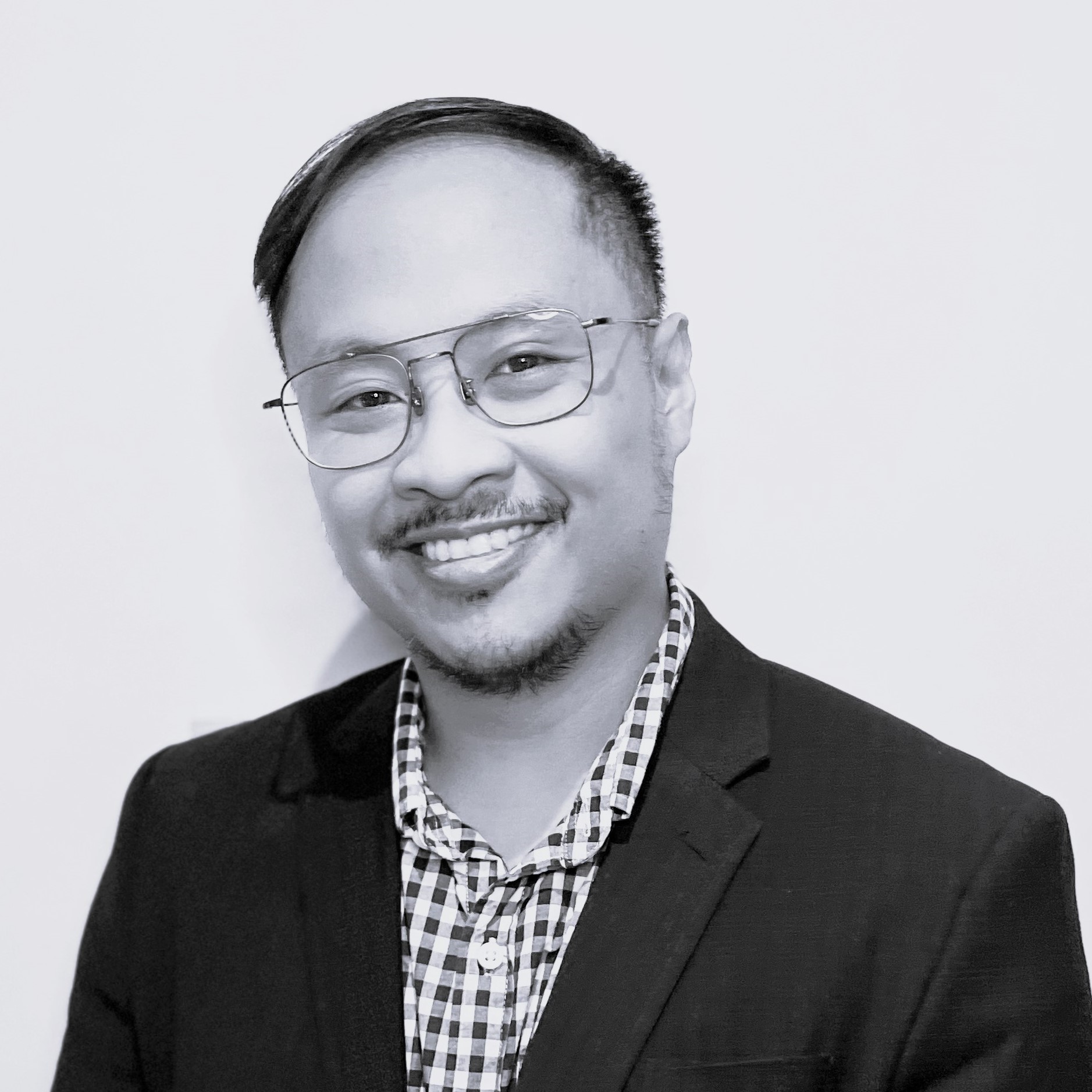
JAN GARCIA, Associate
Jan is an infrastructure consultant with a background in energy systems planning and project delivery. His experience across Canada and the Philippines has shaped a grounded approach to infrastructure, one that balances analysis, collaboration and a strong sense of community impact.
Vancouver, BC
Vancouver is where Jan completed his MBA at University Canada West and further developed his interest in decarbonization and sustainable infrastructure. At Reshape, he has contributed to district energy and low-carbon planning projects across Vancouver, Port Moody, Victoria, Durham, and Waterloo, with a focus on financial modelling, technical analysis, and project coordination. He enjoys working in spaces where policy, engineering, and implementation meet and form deployable projects.
Quezon City, Philippines
Quezon City was Jan’s base during the early part of his career and where he completed both his Master of Science in Energy Engineering and Bachelor of Science in Electrical Engineering at the University of the Philippines in Diliman. From there, he worked on projects across the Philippines, including transmission lines and substations in Quezon, island diesel power plants in Cebu, hydro projects in Kalinga and Benguet, and geothermal projects in Laguna and Albay. These projects gave him an early appreciation for the scale, complexity and on-the-ground realities of infrastructure
delivery.
Paonia, Colorado
Jan spent time in Paonia completing Solar Professionals training with Solar Energy International. Since then, his work in solar photovoltaics has ranged from a master’s thesis on techno-economic feasibility, to rooftop PV installation, utility-scale feasibility work, and off-grid projects serving Indigenous communities. He is particularly interested in how clean energy solutions can be made not only technically sound, but practical, resilient, and accessible.